
Game design
Pet simulator egg rarity tables: how to design them
Design pet simulator eggs players want to open: common-to-mythic rarity tiers, drop-rate math, gold and rainbow variants, pity timers and Roblox odds rules.
Updated 6 min readBy the Proppo team
On this page
Quick answer
A pet simulator egg works best with four to six pets across five tiers, common to mythic, each several times rarer than the one below: for example 60%, 28%, 9%, 2.7% and 0.3%. Turn every chance into average hatches (1 divided by the chance), add a pity timer for long grinds, and show all odds if Robux is involved.
Key takeaways
- Five tiers, common to mythic, are plenty for one egg, and each tier should feel clearly better than the last, not 3% better.
- A 0.3% mythic takes 333 hatches on average, but 767 hatches before 90% of players have one.
- Gold and rainbow variants multiply your content without new models: a 2.5% gold roll on a 0.3% mythic is 1 in 13,333 hatches.
- A hard pity timer at 150 hatches removes the 1% of players who would otherwise still have no legendary.
- If eggs can be bought with Robux, directly or through a paid currency, Roblox requires every outcome's odds on screen, adding up to 100%.
The egg is the heart of a pet simulator. Players grind coins to open it, hope for the rare pet, and come back tomorrow to try again. Whether that loop feels exciting or unfair is decided almost entirely by one small table: which pets are in the egg, and what the odds are. This guide covers how to choose rarity tiers, set drop rates you can defend, do the probability math, use visual variants such as gold and rainbow, and stay within Roblox's rules for random items.
What rarity tiers should a pet simulator egg have?
Common, Rare, Epic, Legendary and Mythic, optionally topped by a secret tier, with four to six pets per egg. Players already know the ladder, so reuse it and make every step look and play clearly better.
The genre has settled on a familiar ladder: Common, Rare, Epic, Legendary and Mythic, sometimes topped by a secret or limited tier. Players already know what those words mean, which is a good reason to reuse them. A few rules keep the ladder useful:
- Each step must be visible. Give every tier its own color, glow and, ideally, a bigger or more detailed model. A legendary that is just a common pet in a new color feels like a scam: higher tiers deserve their own creatures.
- Each step must be useful. If pets give a stat (coins, damage), a higher tier should be clearly stronger, often by a multiple rather than a small percentage.
- Keep eggs small. Four to six pets per egg is easy to read on one odds panel and keeps every pet memorable.
What drop rates should a pet egg use?
Start steep: 60%, 28%, 9%, 2.7%, 0.3% from common to mythic, so each tier is several times rarer than the one below and the table sums to exactly 100%. Then tune it by hatches and minutes of play.
Here is that example egg, used for the rest of the guide:
| Tier | Chance | Avg. hatches | 90% of players |
|---|---|---|---|
| Common | 60% | 1.7 | 3 |
| Rare | 28% | 3.6 | 8 |
| Epic | 9% | 11 | 25 |
| Legendary | 2.7% | 37 | 85 |
| Mythic | 0.3% | 333 | 767 |
Example egg; the chances add up to exactly 100%. Avg. hatches: opens needed for one, on average. 90% of players: opens until 90% of players have at least one.
Tune the table by asking what each tier is for. Commons fill the team in the first minutes. Rares and epics are the steady upgrades of a normal session. Legendaries are the "I have to tell my friends" moment. Mythics are the long-term chase that only dedicated players finish.
How many hatches does it take to get a rare pet?
On average 1 divided by the chance: 333 hatches for a 0.3% mythic. Unlucky players need far more, which is why you should also look at the hatch count for 90% of players.
Percentages hide how long the grind really is. Two formulas tell you more, and both only need the chance p of a single hatch:
- Average hatches for one hit =
1 / p. A 0.3% mythic takes 333 hatches on average. - Chance of at least one hit in n hatches =
1 − (1 − p)^n. After those 333 hatches, only 63% of players actually have the mythic. To get 90% of players there you need 767 hatches.
That gap between the average and the unlucky players is what makes people quit. Multiply the hatch counts by your egg price and your coin income per minute and you get the real number to tune: minutes of play per legendary. If it is hours for your first zone, the egg is too stingy. If it is seconds, the mythic will not feel special.
How do gold and rainbow pet variants work?
They are the same pet with a rarer texture, rolled on top of the tier or crafted from duplicates. They reuse the mesh, rig and animations, so they add chase content for almost no art cost.
Many pet games add a second layer on top of the tier: the same pet in a rarer look. A hatch might come out gold 2.5% of the time (1 in 40) or rainbow 0.5% (1 in 200). Other games let players combine several normal copies into a gold one, and several golds into a rainbow, which turns duplicates into progress.
The two layers multiply. In our example a gold mythic is 0.3% × 2.5% = 1 in 13,333 hatches, which is exactly the kind of brag-worthy pet that keeps a server talking. It also costs you almost nothing: a variant reuses the mesh, the rig and the animations, and only the texture changes.
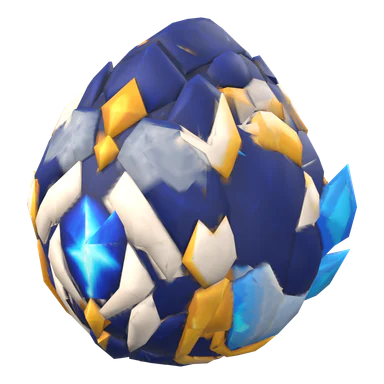
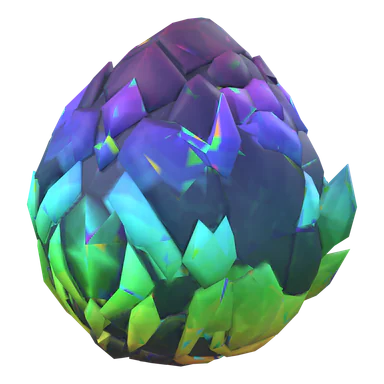
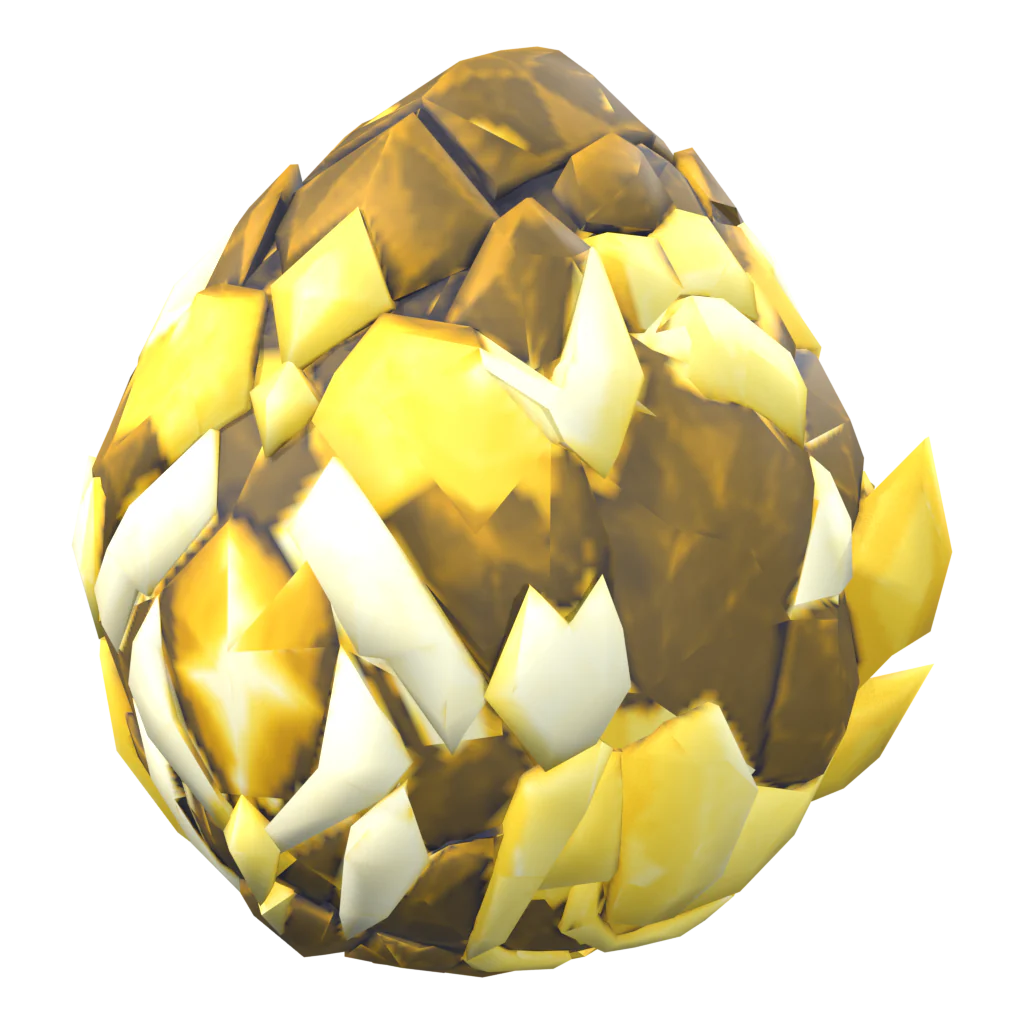
Proppo makes a full variant set from any pet or egg for 5 credits: Gold, Diamond, Shadow, Rainbow and Neon. Each variant is a separate texture on the same mesh, so your hatch animation can swap them instantly. Tier tints (Common, Rare, Epic, Legendary and Mythic) are optional: use them to put a tier's color on a pet that already belongs to that tier, so the model matches its odds panel, not to stretch one creature across every tier. You can browse examples on the rarity sets page.
What is a pity timer, and how do luck boosts change the odds?
A pity timer guarantees (or gradually raises the odds of) a rare result after a run of misses. A luck boost multiplies the rare odds, so a lower tier has to give up the difference to keep the table at 100%.
A pity timer limits bad luck. The hard version guarantees a reward: if a player opens 150 eggs without a legendary or better, the next one is guaranteed. Without pity, 1% of players would still have nothing after 150 hatches at a 3% legendary-or-better rate. With it, that number is zero. A soft version raises the odds a little with every miss instead. Either way, show the counter on screen. Players like seeing progress.
Luck boosts (potions, game passes, events) multiply the rare odds. Remember that the table must still add up to 100%, so something gets smaller. With a 2× boost on legendary and mythic, our example becomes:
| Tier | Normal | With 2× luck |
|---|---|---|
| Common | 60% | 57% |
| Rare | 28% | 28% |
| Epic | 9% | 9% |
| Legendary | 2.7% | 5.4% |
| Mythic | 0.3% | 0.6% |
Common gives up the difference, so the boosted table still sums to 100%.
Does Roblox require you to show egg odds?
Yes, whenever an egg can be opened directly or indirectly with Robux. Roblox's paid random items policy names hatching an egg for a pet as an example and requires the odds of every outcome before purchase.
If players can get random items directly or indirectly with Robux, Roblox treats it as a paid random item. That includes eggs bought with an in-game currency that can itself be bought with Robux. In that case Roblox's policy asks you to:
- Show every possible outcome with its actual numerical odds as a percentage, before purchase. The percentages must add up to 100%.
- Explain probability modifiers (luck boosts, pity systems) before purchase, and update the displayed odds while they are active.
- Check
PolicyService: whenArePaidRandomItemsRestrictedis true for a player, they can't use paid random items, and you have to apply one of Roblox's allowed treatments, such as a free way to earn the item, a direct purchase, or hiding the item.
What should you check before launching a new egg?
The pets and their tiers, the odds table, the hatch math, variants, pity and the on-screen odds:
- Pick four to six pets and assign each a tier with its own look.
- Write the odds table and check it sums to exactly 100%.
- Turn chances into hatches, then into minutes of play using your egg price and income.
- Decide on variants (gold, rainbow) and whether players hatch them or craft them.
- Add a pity counter for the top tiers if the grind is long.
- Show the odds in game, labeled clearly, and keep them in sync with boosts.
- Keep the models light. Dozens of pets on screen add up, see triangle and texture limits.
Frequently asked questions
What are good drop rates for a pet simulator egg?
Do I have to show egg odds in my Roblox game?
What is a pity timer?
How do I make gold and rainbow versions of a pet?
Fill your egg table
Generate the pets for your next egg, then give every one a full rarity set from the same mesh and rig.
60 free credits when you confirm your email. No card needed.
Related guides
All guides Tutorial
How to make an egg hatching system in Roblox (Luau)
Weighted server roll, DataStore saving, a shake-crack-reveal animation, triple hatch and the odds rules.
10 min readUpdated October 31, 2026Read
 Tutorial
How to make a Roblox pet with AI (step by step)
Concept, 3D model, rig, rarity set and import: the whole pet pipeline in one walkthrough.
6 min readUpdated October 31, 2026Read
 Reference
Roblox triangle and texture limits for mobile-friendly pets
The hard limits, the budgets pet games actually use, and how to hit them without losing the silhouette.
5 min readUpdated October 31, 2026Read
 Tutorial
How to import a 3D model into Roblox Studio (FBX, textures, rigs)
3D Importer settings that matter, rigs and animations, textures and the usual import errors.
7 min readUpdated October 31, 2026Read